Not a case study PDF. The actual ad accounts, screenshotted.
Real screenshots from live ad accounts I manage personally. No staged dashboards, no cherry-picked slide.
- Meta Business Partner
- Rated 4.6 “Excellent” on Trustpilot, 18 reviews
- 100+ accounts managed personally
- 20+ years running paid media
Pulled straight from the accounts.
Meta Ads dashboards and landing page tests, direct from the platforms. Select any screenshot to open it full size.
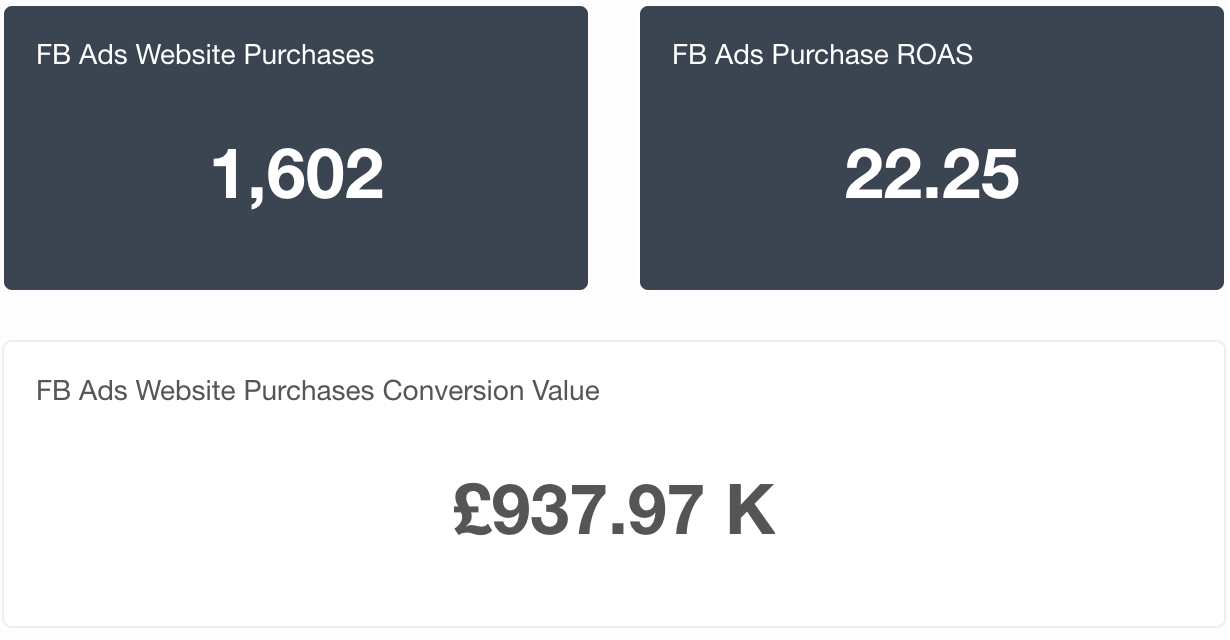
- Meta Ads: purchases and ROAS01
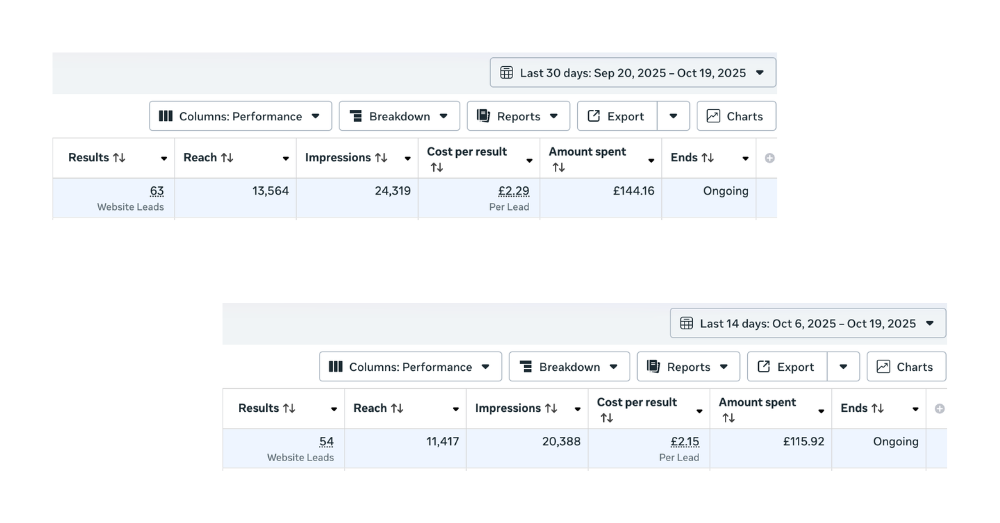 Meta Ads: lead campaigns02
 Meta Ads: leads, purchases and ROAS03
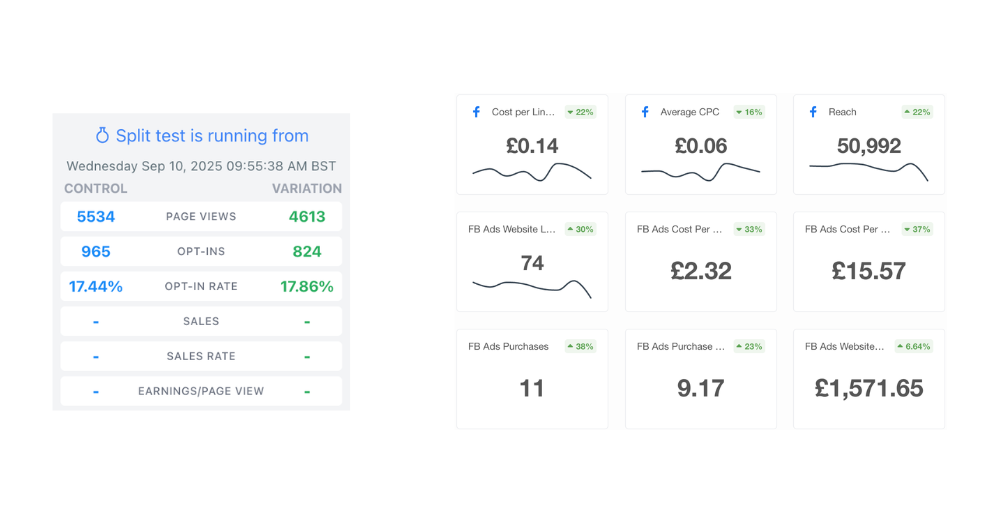 Landing page split test, with Meta results04
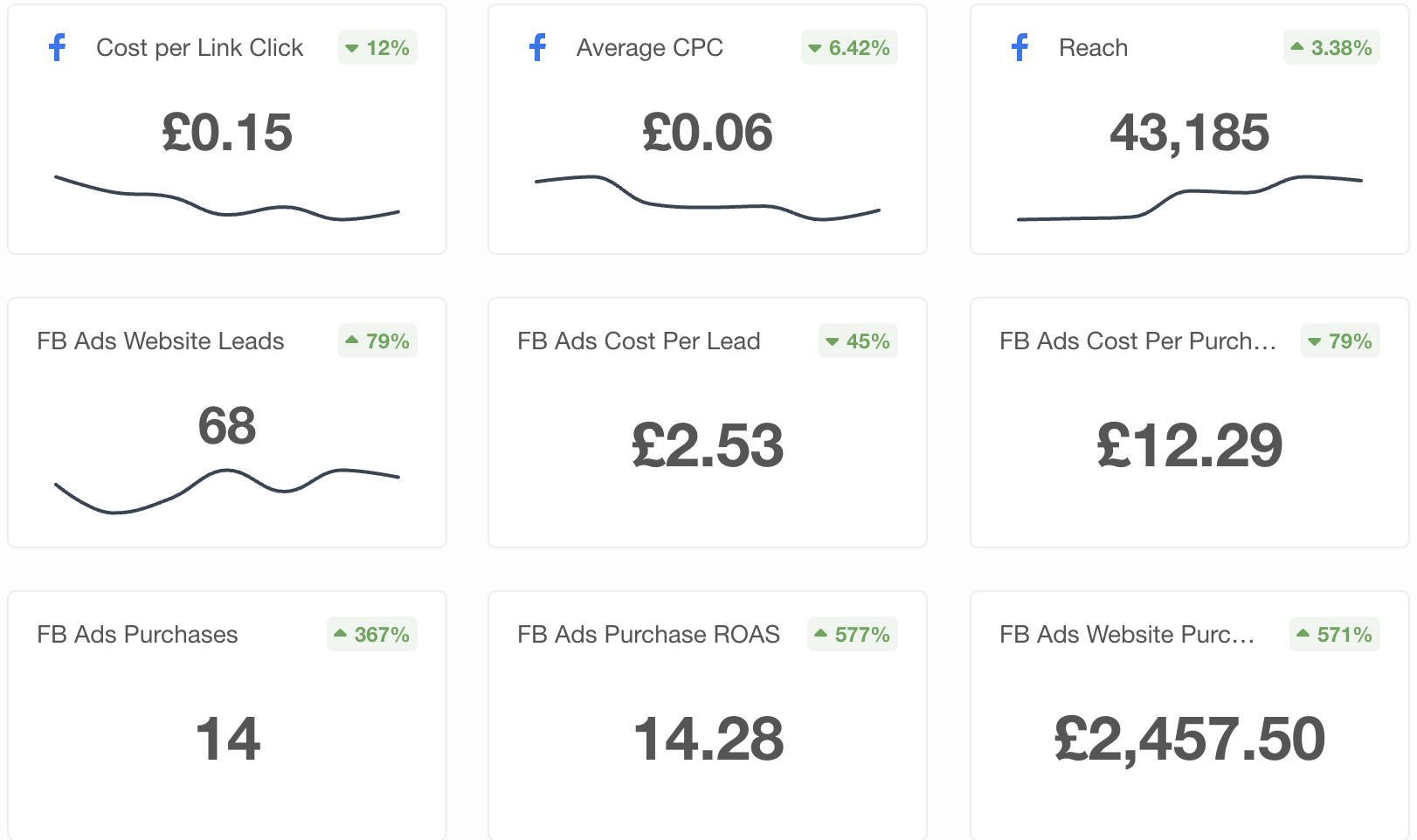 Meta Ads: account dashboard05
 Meta Ads: campaign ROAS and quality ranking06
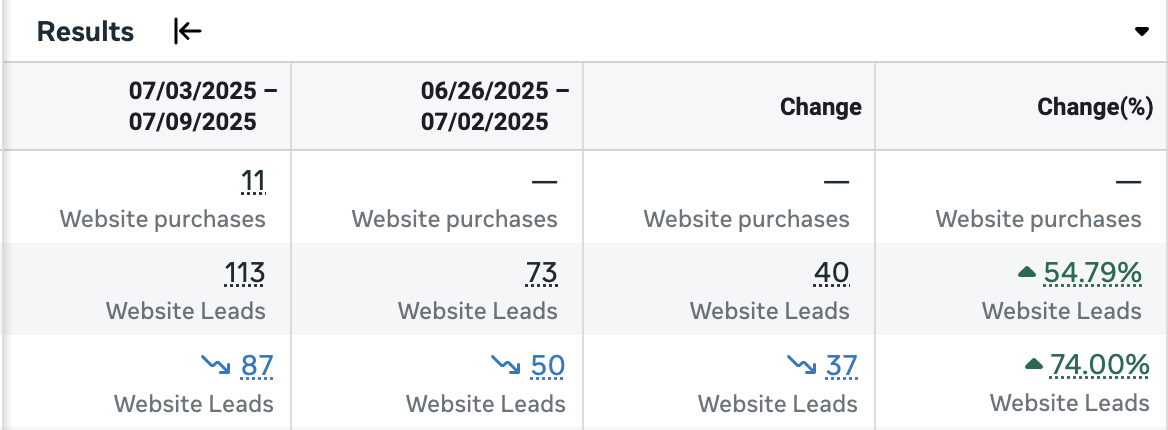 Meta Ads: week-on-week leads07
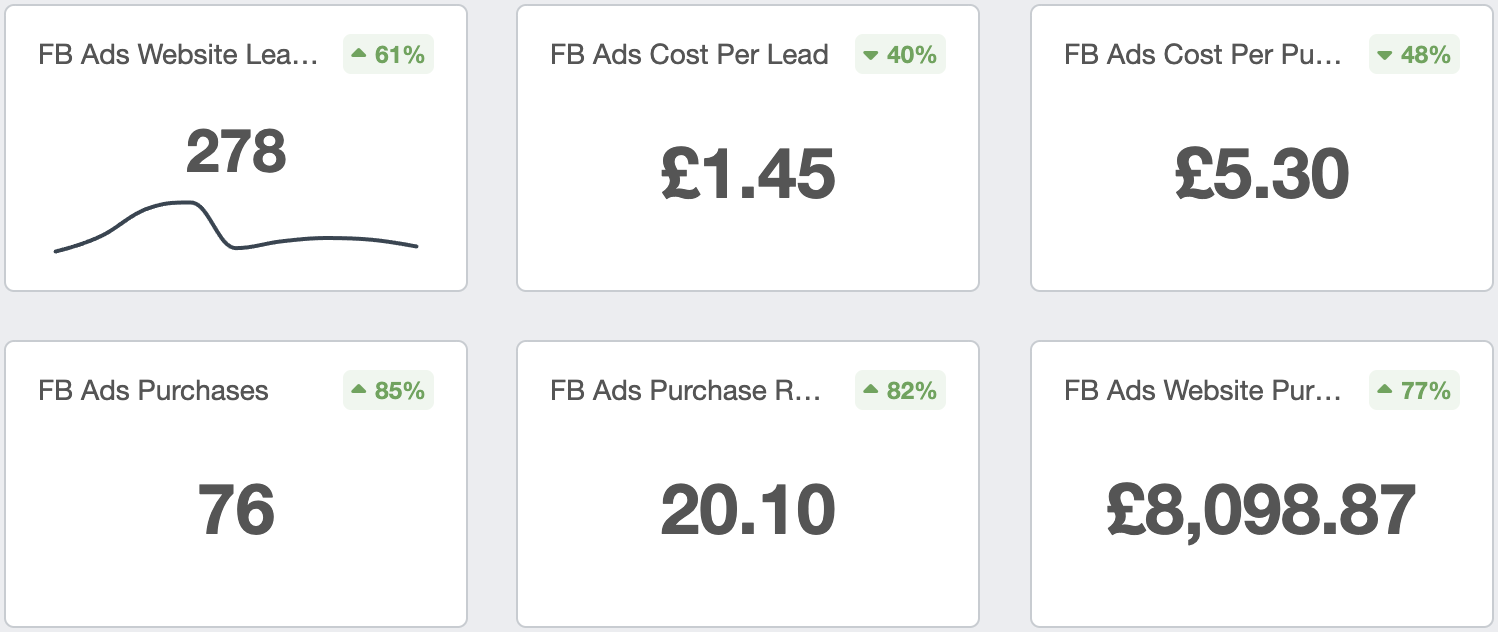 Meta Ads: leads, purchases and ROAS08
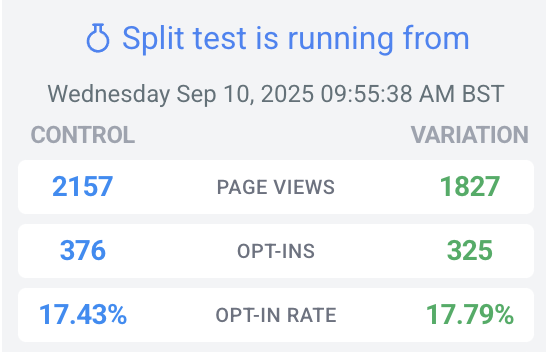 Landing page split test09
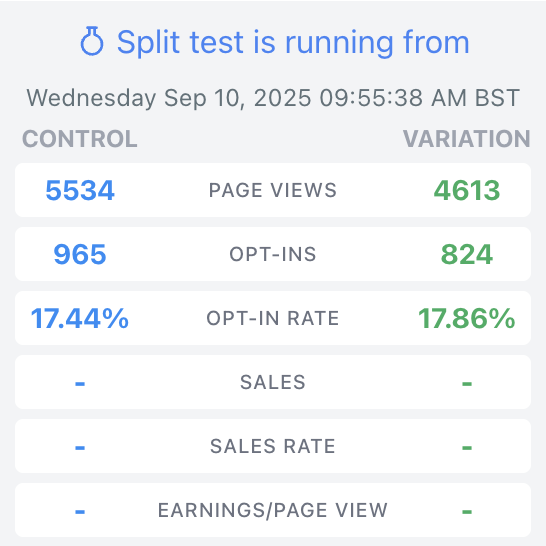 Landing page split test10
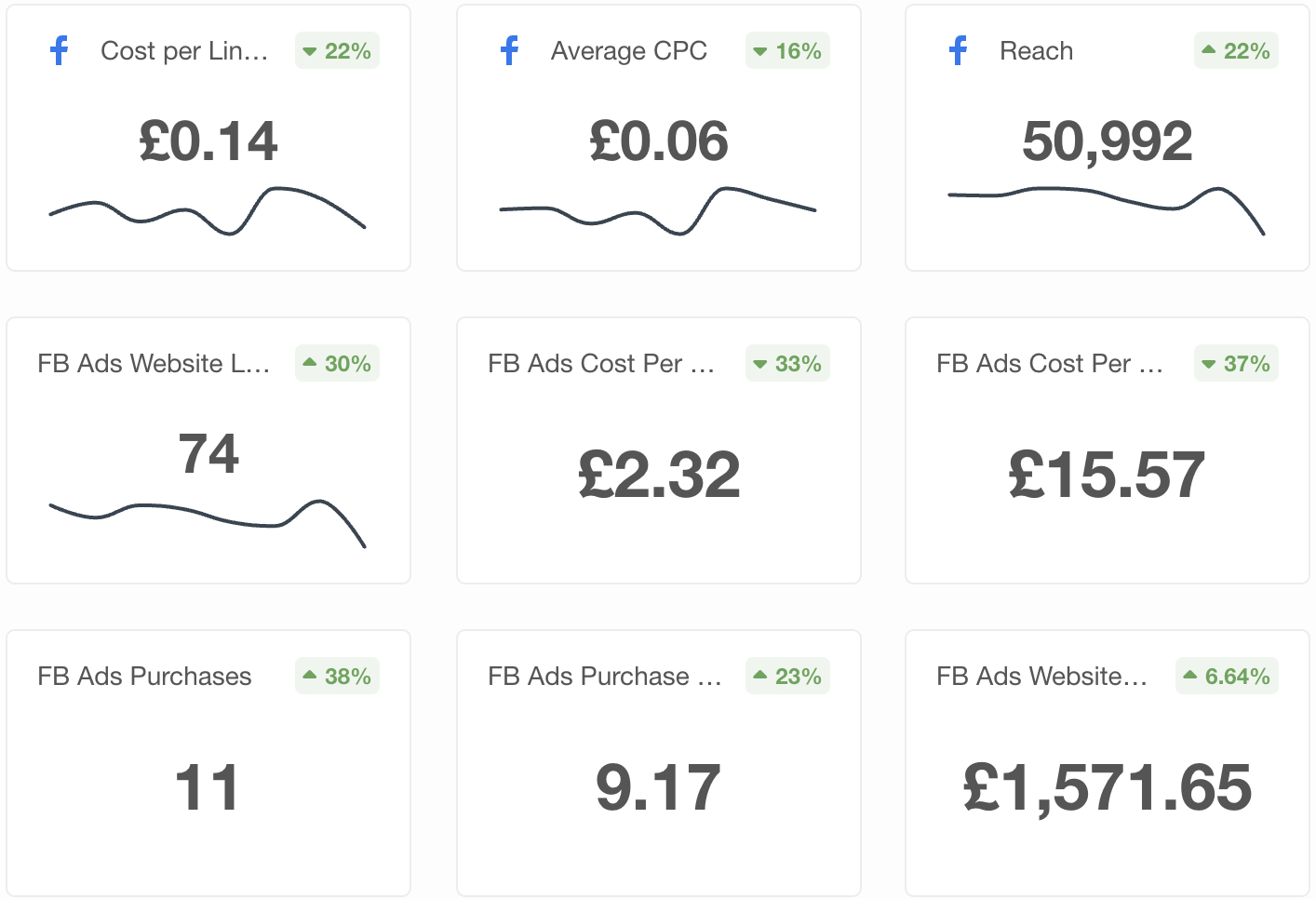 Meta Ads: account dashboard11
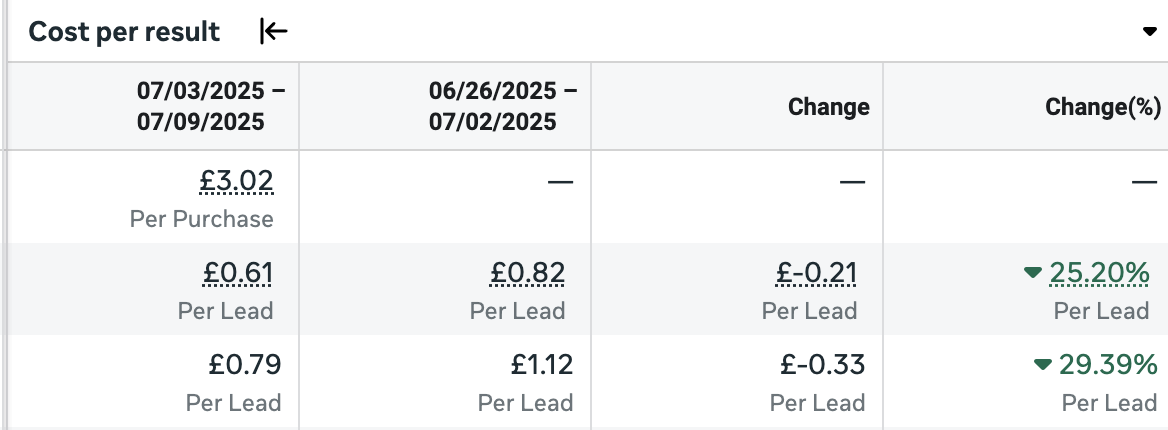 Meta Ads: week-on-week cost per lead12
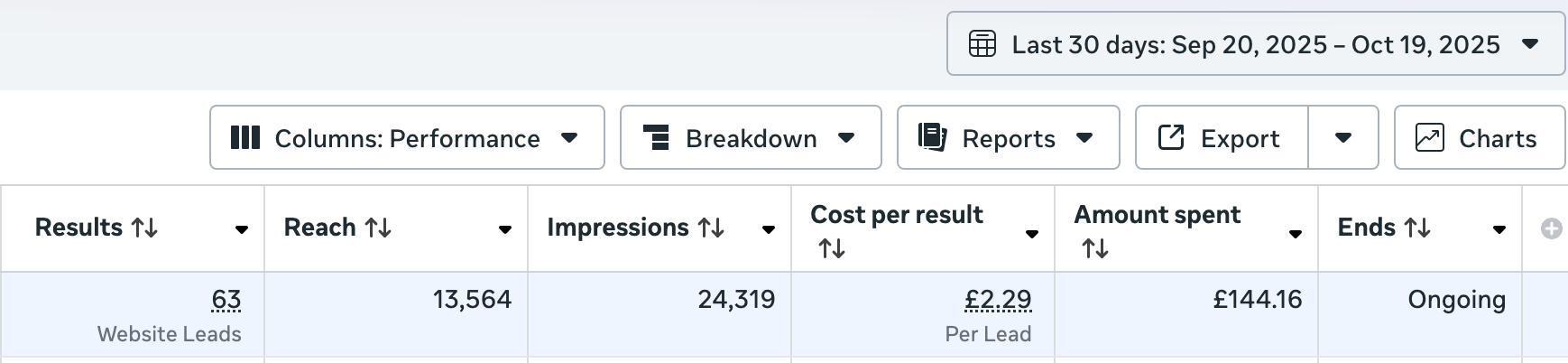 Meta Ads: lead campaign13
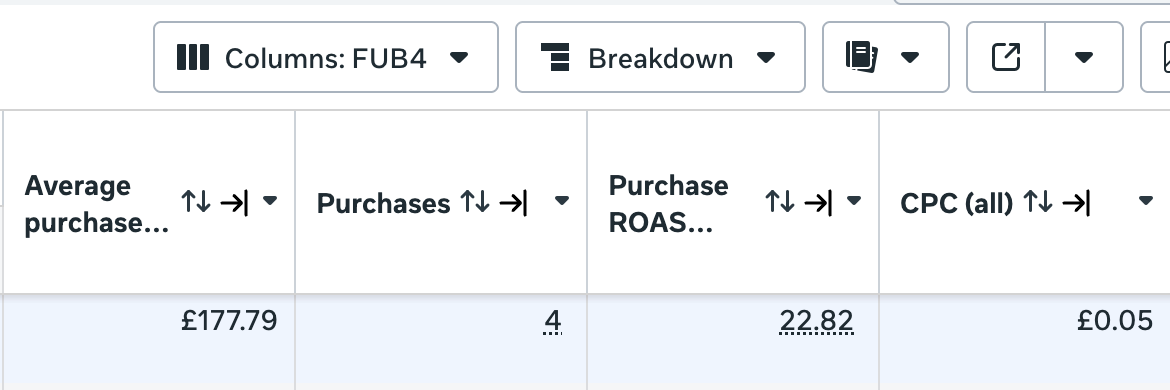 Meta Ads: ROAS and cost per click14
 Meta Ads: applications and purchases15
 Meta Ads: lead campaign16
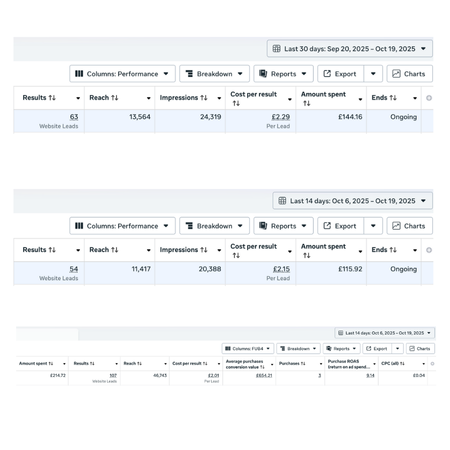 Meta Ads: lead campaigns17
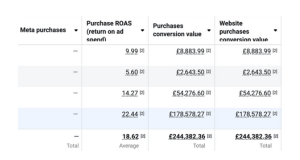 Meta Ads: ROAS and purchase value by campaign18
I won’t show you a screenshot and promise you’ll get the same.
Here’s why that’s a good sign.
Every account starts from a different place: a different product, budget, market and history. A screenshot shows what happened in one account. It doesn’t tell you what will happen in yours.
“Anyone who tells you a screenshot guarantees your result is telling you something about how they sell, not how the work actually goes.”
What I will do is look at your numbers on the first call and tell you plainly what’s realistic. If your budget is under £1.5K a month, I’ll turn the work away, because it won’t be enough to do the job properly.
The numbers behind the screenshots.
Results from past client accounts, as they happened. Single-account results are labelled as single accounts.
35%
Lower cost per booking
Average across past clients
2×
Lead volume
Past clients
50%
Revenue growth
Off traffic clients were already paying for
£1.39
Cost per enquiry
456 enquiries in one account
28.66×
Purchase ROAS
One past client account
What clients say on Trustpilot
“Been with Barrie for a month now and already he has filled my diary, can’t believe how quick it happened. No pressure from him to buy the service either.”
“Barrie has been managing our social ads for years! Wouldn’t go anywhere else as he smashes it month on month!”
“We have been working with Barrie for over a year now, and I can honestly say it’s been the best business decision I’ve made.”
“We have worked with Barrie for the past 6 years, he comes up with some fantastic ideas and really helps to drive your business forward.”
Straight answers, before you ask
Want to see what your own account could do?
Tell me what you’re running. On the call I’ll tell you honestly what I see and whether I can hit your targets.
- 1Schedule a call for a time that suits you, or choose Call me and I’ll ring you.
- 2I look at your ads before we speak, so the call is about your business, not a sales script.
- 3On the call, we go through your options. I tell you honestly whether I can hit your targets. If I can’t, I’ll say so.
Prefer to talk now? Call 07590 329 204
Pick a time that suits you. You’ll get a confirmation straight away.
Two quick questions, then your details. I’ll call you during office hours.